
It started with a moment every vehicle owner dreads—turning the key and hearing nothing. Just a lifeless click. I had left the dome light on overnight, and now my car battery was toast… or so I thought.
That morning marked my first introduction to a pulse repair battery charger—a piece of technology I had barely heard of. I thought battery chargers simply pushed current into the battery until it was fully charged. But as I discovered, there’s a lot more happening under the hood when you introduce pulse technology.
Let’s walk through what it is, how it works, and why you might want one in your garage today.
Understanding Pulse Repair Battery Chargers
So, what is a pulse repair battery charger exactly?
Unlike conventional chargers, pulse chargers don’t just top off a battery. They’re designed to improve the battery’s condition, especially in lead acid batteries, by restoring its ability to store and deliver energy. They do this by addressing a hidden enemy inside your battery: sulfate buildup.
When batteries age or sit unused, lead sulfate crystals begin to form on the battery plates. This hard buildup reduces battery voltage, limits capacity, and compromises performance. Eventually, it leads to battery failure.
The pulse charging method sends high frequency pulses of energy through the battery. These pulses, carefully controlled in amplitude, frequency, and pulse width, help break apart those harmful sulfate crystals, giving your battery a chance to reverse some of the aging effects.
The Charging Process: How It Works
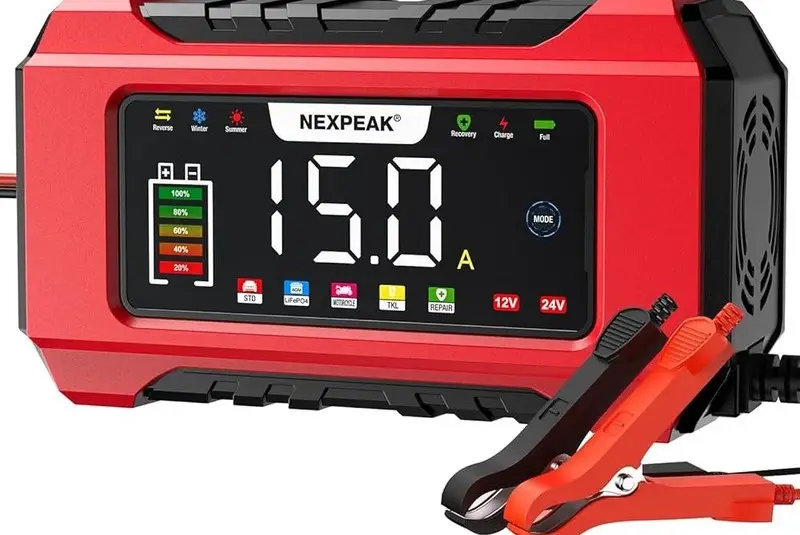
When I first connected the pulse charger to my battery, I was skeptical. I verified the connection at the terminals and reviewed the instructions. A tiny screen read: “Verification successful. Waiting…” Then the charging process began.
It’s fascinating how it works.
The charger delivers pulses—quick, high-voltage jolts spaced in milliseconds—that target the sulfate crystals bonded to the battery plates. Over time, this process breaks them down, allowing the electrolyte to interact properly with the plates again.
This means your battery can return to full capacity, respond better, and store more energy. It’s not magic—it’s science.
Some units even have a diagnostic mode that can measure your battery’s condition, adjust temperature settings, or detect overcharging risks. The goal is to maintain safety while maximizing effectiveness.
Key Benefits: Why Choose Pulse Charging?
After two days on the charger, my old battery wasn’t just charged—it felt renewed.
Here’s why pulse repair chargers are worth a closer look:
Improved battery life – Regular use can extend your battery’s lifespan, especially in vehicles that aren’t driven daily.
Restored energy delivery – With the sulfate removed, batteries deliver more energy during each cycle.
Prevention of overcharging – Smart pulse chargers monitor voltage to prevent heat damage or bulging.
Improved battery performance – Smoother starts, better lighting, and fewer charge cycles.
Safe battery storage – These chargers are ideal for maintaining stored batteries, such as in boats, RVs, or backup generators.
In short, pulse technology helps batteries get closer to their original form and function, often producing the best results for aging or sluggish batteries.
Important Tips: Using a Pulse Charger Safely
Here are a few tips I picked up to get the most from pulse charging:
1. Verify compatibility. Not all chargers are suitable for all battery types.
2. Connect the charger properly—positive to positive, negative to negative. A bad connection can lead to ineffective charging or worse.
3. Review instructions thoroughly before use, especially the charging modes and safety procedures.
4. Monitor temperature and heat during charging. Some heat is generated, but excessive warmth might indicate a problem.
5. Disconnect once the battery is fully charged, unless your charger has a float or maintenance mode.
Some chargers even create a maintenance log or display codes like Ray ID numbers to help track performance history—a nice touch if you’re managing multiple batteries.
Potential Drawbacks and What to Watch Out For
No technology is perfect, and pulse charging does have some caveats.
For one, it’s not a cure-all. In some instances, the battery’s condition may be too far gone. Severely damaged plates or dried-out electrolyte levels might make recovery impossible.
Also, overcharging is still possible if the charger lacks a smart cutoff function. Excessive heat can warp the plates and cause more harm than good. And while pulse charging may reverse some sulfate buildup, sulfate crystals can return over time without ongoing maintenance.
Another key point: pulse repair chargers don’t work with all battery types. If you’re using lithium-ion or nickel-based cells, these devices may not be appropriate.
Quick Answers for Curious Minds
- Can pulse chargers restore a completely dead battery?
Not always. If voltage is too low or the battery is damaged, the charger may not even proceed with charging.
- How long should I charge my battery using a pulse charger?
This depends on the mode, your battery’s size, and condition. Some charges can take up to 48 hours for full reconditioning.
- Is it safe to leave the charger connected overnight?
If the charger includes intelligent cutoff and safety modes, yes. Otherwise, you should disconnect it once fully charged to avoid overcharging.
- What’s the difference between pulse charging and trickle charging?
Trickle chargers provide a low continuous current. Pulse chargers send high-frequency bursts that actively break down sulfates, restore voltage, and boost capacity.
Final Thoughts: Is It Worth It?
If you rely on lead acid batteries for your daily drive, emergency backup, or off-grid systems, a pulse repair charger can be a game-changer. I’ve personally avoided at least two costly battery replacements since adopting pulse charging.
Yes, it’s a different method than the average charger. But for maintaining security, reducing waste, and keeping your batteries at peak performance, it’s a worthy investment.
Whether you’re maintaining a fleet of vehicles or trying to respond to an aging backup battery, this technology gives you more control, more energy, and longer-lasting results.
So, the next time your battery seems weak, don’t rush to replace it. Plug in a pulse charger—and give your battery a second chance at life.