
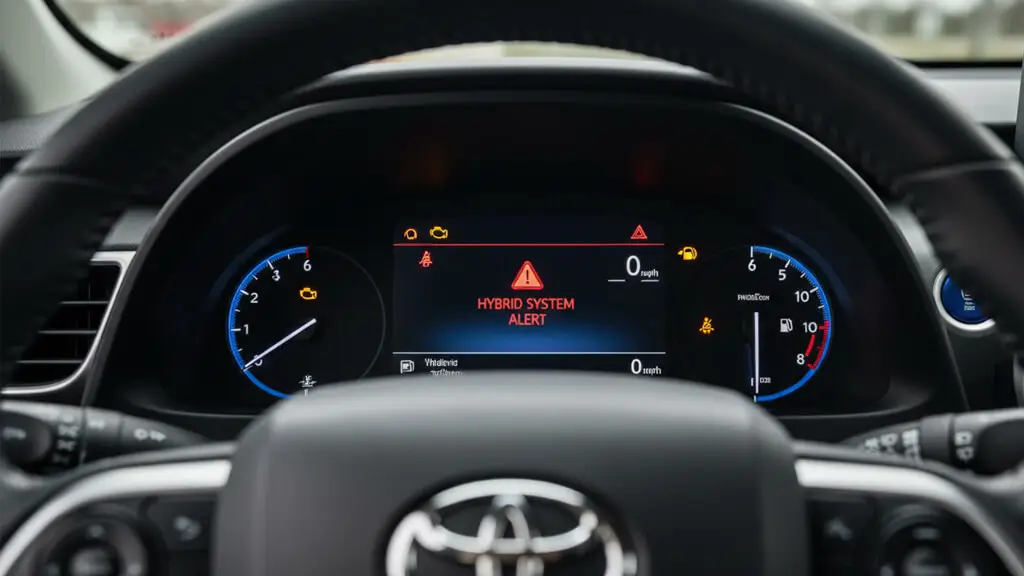
You start your Prius, everything feels normal—and then that message appears on your dashboard:
“Check Hybrid System.”
For many drivers, the first instinct is simple: Can I just reset it and move on?
The answer is yes… but that’s only part of the story.
At Aloy Hybrid, we’ve seen this situation countless times. Many owners attempt a reset first—only for the warning to return days or weeks later. In some cases, it’s something minor. In others, it’s the earliest sign of a deeper hybrid battery issue.
Before you decide what to do next, it’s important to understand both the reset process and what your Prius is actually trying to tell you.
How We Reset the “Check Hybrid System” Light
If your Prius is still driving normally, the warning may be triggered by something temporary—like a weak 12V battery or a minor electrical glitch. In these situations, a reset can clear stored or “ghost” codes.
The 12V Battery Disconnect Method
This is the most common manual reset we see used in the field.
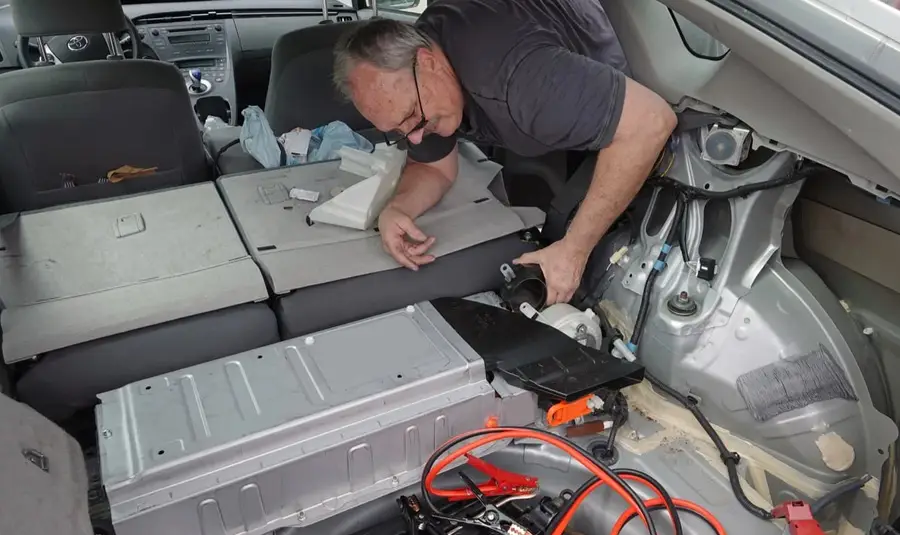
Start by turning the vehicle completely off and making sure it is in Park. Then access the 12V auxiliary battery, usually located in the rear corner of the trunk area.
Using a 10mm wrench, disconnect the negative (black) terminal. Let the system sit for about 10 minutes. This allows the ECU and control modules to fully reset their stored memory.
Once reconnected, start the vehicle again. If the issue was temporary, the warning light may not return.
The Smarter Approach: OBD2 Scanner Reset
In most cases, we recommend using an OBD2 scanner with apps like Dr. Prius or Carista instead of relying only on a manual reset.
This approach allows you to read and store diagnostic trouble codes (DTCs) before clearing them. That step is critical because those codes tell the real story behind the warning.
We always tell owners the same thing: don’t just clear the light—understand it first.
What Your Prius Is Actually Telling You
Resetting the warning is only a temporary action. Understanding the cause is what protects your hybrid system long-term.
From real-world diagnostics, we consistently see a few key trouble codes in Prius models. Each one points to a different level of concern:
| Error Code | What It Really Means |
| P0A80 | The hybrid battery is no longer balancing properly and likely needs repair or replacement. |
| P3011 – P3024 | A specific battery module (block 1–14) is weakening or failing. |
| P0A93 | A problem with the inverter cooling system that needs immediate attention. |
| P3000 | A general hybrid battery fault reported by the battery control system. |
These codes are early warning signals. If they are repeatedly cleared without addressing the root cause, the issue usually progresses over time.
Why Repeated Resets Can Backfire
This is where many Prius owners unintentionally make the problem worse.
We’ve seen situations where repeated resets kept the vehicle running temporarily—but allowed internal battery stress to build up.
Here’s what typically happens inside the system:
When one or more battery modules begin to weaken, the hybrid system compensates by placing extra load on the remaining healthy modules. That imbalance creates heat and uneven charging inside the battery pack.
Over time, this can lead to:
- A small module issue developing into full battery failure
- Excess heat affecting surrounding components
- In severe cases, damage to the inverter system
You may also notice reduced fuel economy and the engine running more frequently than usual.
What looks like a simple warning light is often the first step in a larger failure cycle.
When a Reset Makes Sense—and When It Doesn’t
In our experience, a reset can be useful only in specific situations:
- When the issue is temporary, such as a weak auxiliary battery
- When the warning does not return after multiple drive cycles
- When no critical hybrid battery codes are present
But if the warning comes back, that’s no longer a reset situation—that’s a diagnostic situation.
At that point, the goal shifts from clearing codes to understanding what is failing inside the system.
Our Expertise in Hybrid Battery Care
Behind every diagnosis and repair approach at Aloy Hybrid is hands-on experience built from years of working directly with hybrid systems in real-world conditions.
Raymond Ghaleb leads Aloy Hybrid with over 15 years of experience in hybrid battery reconditioning and diagnostics. Together with our skilled technical team, we focus on identifying the true condition of hybrid battery systems at a cell level—rather than relying on guesswork or unnecessary full replacements.
Our approach is built on three core principles: accurate diagnostics, eco-friendly repair practices, and cost-effective solutions that extend the life of hybrid vehicles whenever possible.
This experience-driven methodology allows us to clearly differentiate between a temporary system reset situation and a deeper hybrid battery issue that requires proper intervention.
A More Practical Way to Approach Hybrid Battery Issues
Not every “Check Hybrid System” warning means a full battery replacement is needed.
In many cases we handle, only a small number of modules are actually failing, while the rest of the battery pack is still in usable condition.
That’s why modern hybrid diagnostics focus on cell-level analysis instead of replacing the entire battery unnecessarily.
It’s a more precise approach—and in many cases, a far more cost-effective one.
If Your Warning Light Keeps Coming Back…
A one-time reset can sometimes help. But a recurring warning is your Prius asking for attention.
In our experience, the best results always come from diagnosing early—before a small imbalance turns into a larger and more expensive failure.
Because with hybrid systems, timing is everything.
FAQs
- Can I reset the “Check Hybrid System” warning in a Prius?
Yes, you can reset the warning using methods like disconnecting the 12V battery or using an OBD2 scanner. However, this only clears the alert temporarily. If there’s an underlying issue—especially with the hybrid battery—the warning will likely return. Resetting should be seen as a short-term step, not a permanent fix.
- What causes the “Check Hybrid System” message in a Prius?
This warning can be triggered by several issues, ranging from minor problems like a weak 12V battery to more serious concerns such as hybrid battery failure, inverter cooling issues, or faulty battery modules. The exact cause can only be confirmed by reading diagnostic trouble codes (DTCs).
- Is it safe to drive with the “Check Hybrid System” light on?
In some cases, the vehicle may still drive normally for a short period. However, continuing to drive without diagnosing the issue can lead to further damage. If the warning is related to the hybrid battery or inverter system, ignoring it may result in reduced performance or costly repairs.
- Will disconnecting the battery reset the hybrid system warning?
Disconnecting the 12V battery can reset the system and clear stored codes. This method may work if the issue is temporary or caused by an electrical glitch. However, it does not fix underlying problems, and the warning will return if the root cause is not addressed.
- What do Prius hybrid battery error codes like P0A80 mean?
Error codes such as P0A80 typically indicate that the hybrid battery is deteriorating and no longer maintaining proper balance. Other codes, like P3011–P3024, point to specific failing battery modules. These codes are early warning signs that the battery system needs attention.
- Why does the “Check Hybrid System” warning keep coming back after a reset?
If the warning returns after being cleared, it usually means the issue is not temporary. The system is detecting a recurring fault, often related to battery imbalance or component failure. Repeated resets without proper diagnosis can worsen the condition over time.