

Whether you’ve just rolled off the lot in a 2026 RAV4 Hybrid or you’re the proud owner of a high-mileage Prius, one thing is certain: you’re driving one of the most sophisticated pieces of engineering on the road.
At Aloy Hybrid, we know Toyota lovers appreciate reliability. But “reliable” doesn’t mean “invincible.” To keep that fuel economy peaking and your battery healthy for the next decade, you need a solid grasp of Toyota Hybrid Care.
Here is your ultimate guide to the hybrid maintenance schedule and the pro tips that keep your Toyota humming.
1. The Toyota Hybrid Maintenance Schedule: At a Glance
Toyota hybrids actually require less frequent mechanical maintenance than traditional cars in some areas (like brakes), but they have unique needs in others.
| Interval | Key Service Task | Why It Matters |
| Every 5,000 Miles | Tire Rotation & Visual Inspection | Prevents uneven tread wear; heavy hybrid batteries can stress tires faster. |
| Every 10,000 Miles | Synthetic Oil & Filter Change | Keeps the internal combustion engine (ICE) efficient for when it kicks in. |
| Every 30,000 Miles | Hybrid Battery Cooling Filter | Crucial. If this filter clogs, your battery overheats and loses its lifespan. |
| Every 30,000 Miles | Cabin & Engine Air Filters | Keeps airflow clean for both you and the hybrid system. |
| Every 100,000 Miles | Spark Plugs & Coolant Flush | Ensures the engine fires perfectly and the inverter stays cool. |
2. The “Hidden” Hybrid Hero: The Battery Cooling Vent
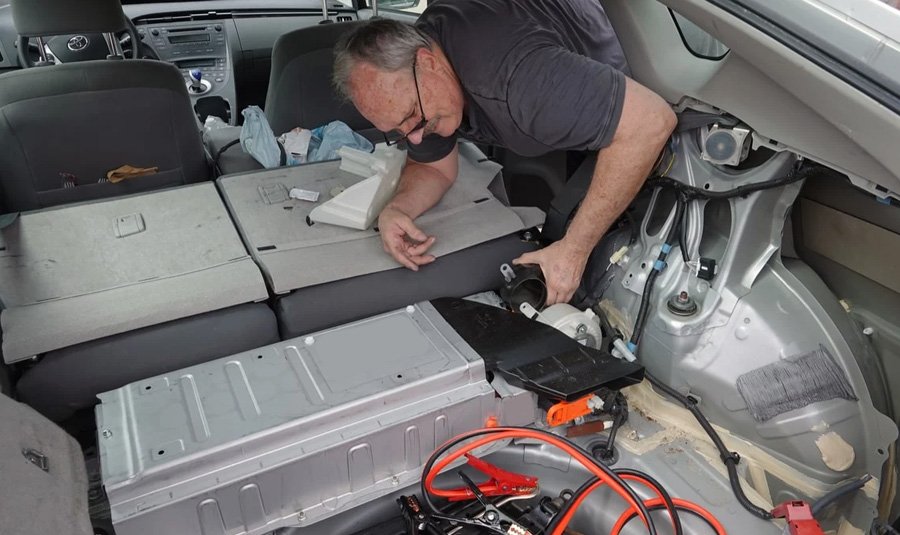
If you look near the rear seats (usually on the side or floor), you’ll see a small intake vent. This is the “nostril” for your hybrid battery.
- The Golden Rule: Never block this vent with bags, blankets, or pet hair.
- The Care Tip: Dust this vent monthly. If your Toyota tells you “Maintenance Required for Hybrid Battery Cooling Parts,” don’t panic—it usually just means the filter is dusty. Clean it immediately to avoid permanent battery degradation.
3. Why Hybrid Brakes Last Forever (Almost)
One of the best perks of Toyota Hybrid Care is the regenerative braking system. When you step on the pedal, the electric motor reverses to slow the car down, charging the battery in the process.
- The Result: Your physical brake pads often last 100,000+ miles.
- The Catch: Because they aren’t used as heavily, brake calipers can sometimes seize up from rust or debris. Have a technician lubricate the slide pins annually to ensure they’re ready when you really need them.
4. Driving Habits for Longevity
Your driving style is the best “maintenance” tool you have.
- Avoid “Deep Discharge”: Try not to let your car sit for more than two weeks at a time. The battery likes to be exercised. If you’re going on a long vacation, have a friend drive it for 20 minutes once a week.
- The 20-80 Rule: The Toyota computer is great at managing this, but if you have a Plug-in Hybrid (PHEV), try not to leave it at 100% or 0% charge for long periods. The “sweet spot” for battery chemistry is right in the middle.
5. When to Call the Pros at Aloy Hybrid
Even with the best care, components eventually wear out. If you notice any of the following, it’s time for a professional diagnostic:
- The Fan is Loud: If you hear a constant whirring from the rear seat area, your battery is struggling to stay cool.
- MPG Drop: A sudden 10-15% drop in fuel economy is often the first sign of a weakening hybrid battery.
- The “Red Triangle”: Don’t ignore dashboard warnings. Early intervention can often save a battery pack through cell reconditioning rather than full replacement.
Keep Your Toyota a Toyota
Toyota hybrids are built to last 200,000 to 300,000 miles, but they rely on you to keep the “electric side” of the house clean and cool. Stick to the hybrid maintenance schedule, keep those vents clear, and your Toyota will stay on the road for years to come.
Need a health check or a battery refresh? Contact for expert diagnostics and mobile installation!
What’s the current mileage on your Toyota hybrid, and have you ever had your battery cooling filter checked?
FAQs
- Does a Toyota hybrid require more maintenance than a regular car?
Actually, no. While hybrids have an extra electric motor and battery, they share many components with gas cars. In fact, because of regenerative braking, your brake pads and rotors often last twice as long as those on a conventional vehicle. The primary “extra” task is simply keeping the battery cooling vents clean.
- How often should I follow the Toyota Hybrid maintenance schedule?
Standard service intervals are typically every 5,000 to 10,000 miles. However, the “hybrid-specific” checks—like inspecting the hybrid inverter cooling system and cleaning the battery air intake filter—should be prioritized every 30,000 miles to prevent overheating.
- What is the most common cause of hybrid battery failure?
Heat is the number one enemy. This is often caused by a clogged battery cooling fan or blocked air vents in the rear cabin. If the battery can’t “breathe,” the cells degrade much faster. Regular cleaning of these filters is the cheapest way to avoid a multi-thousand-dollar replacement.
- How long does a Toyota hybrid battery actually last?
Most Toyota hybrid batteries are designed to last the life of the vehicle, typically 10–15 years or 150,000–200,000 miles. With proactive care (like that provided by Aloy Hybrid), many owners see their batteries go well beyond 250,000 miles.
- Can I drive my Toyota hybrid if the “Check Hybrid System” light is on?
It is not recommended. This light usually indicates a fault in the high-voltage system. While the car might still drive using the gas engine, you risk damaging the inverter or completely depleting the hybrid battery, which could leave you stranded.
- Does my hybrid need special oil?
Most modern Toyota hybrids (like the Prius, RAV4, and Camry) require 0W-20 or 0W-16 synthetic oil. Because the gas engine frequently stops and starts, this low-viscosity oil is essential for immediate lubrication and maximum fuel efficiency.
- What happens if I don’t drive my hybrid for a long time?
Hybrid batteries don’t like to sit idle. If left for more than a few weeks, the battery can “deep discharge,” which is hard on the cells. We recommend driving your Toyota for at least 20–30 minutes once a week to keep the system cycled and the 12V auxiliary battery charged.
- Why is my gas engine running more often than usual?
If you notice the engine kicking in more frequently, it might be a sign that the hybrid battery is struggling to hold a charge or the outdoor temperature is extreme. It could also mean your 12V auxiliary battery is weak, forcing the engine to run to keep the electronics powered.
- Do I need to service the hybrid cooling system?
Yes. Hybrids have two separate cooling systems: one for the engine and one for the hybrid inverter. Toyota recommends inspecting these fluids regularly and performing a flush around the 100,000-mile mark to ensure the electronics don’t overheat.
- Can I replace just one cell in my hybrid battery?
While “patching” a battery by replacing a single dead cell is possible, it’s often a short-term fix. Usually, when one cell fails, others are close behind. At Aloy Hybrid, we recommend professional reconditioning or a full pack replacement to ensure balanced voltage and long-term reliability.