
It doesn’t happen all at once.
In the years I’ve spent working on hybrid batteries—especially Prius models—I’ve rarely seen a battery fail overnight. It doesn’t just stop working one morning.
Instead, it drifts.
A mile less per gallon this week. A slightly louder hum next month. The engine stepping in more often than it used to. Nothing dramatic. Nothing urgent.
And that’s exactly why most people miss it.
By the time a hybrid battery reaches us for inspection, it’s usually been under stress for months—not days.
The “Black Box” Problem I See Every Day
For most drivers, hybrid batteries still feel like a mystery.
I hear it all the time:
They know it’s expensive. They know it’s important. But beyond that, it’s out of sight, out of mind.
What’s changed in 2026 is how much we can actually see before things go wrong.
With modern diagnostic tools, we’re no longer waiting for failure. We can track early-stage imbalance, temperature behavior, and performance inconsistencies long before the battery triggers a warning light.
And in my experience, that early visibility is what makes the biggest difference.
Heat: The Silent Damage Most Owners Never Notice
If there’s one pattern I see again and again, it’s heat-related wear.
Not extreme overheating. Not sudden failure.
Just slightly elevated temperatures… over time.
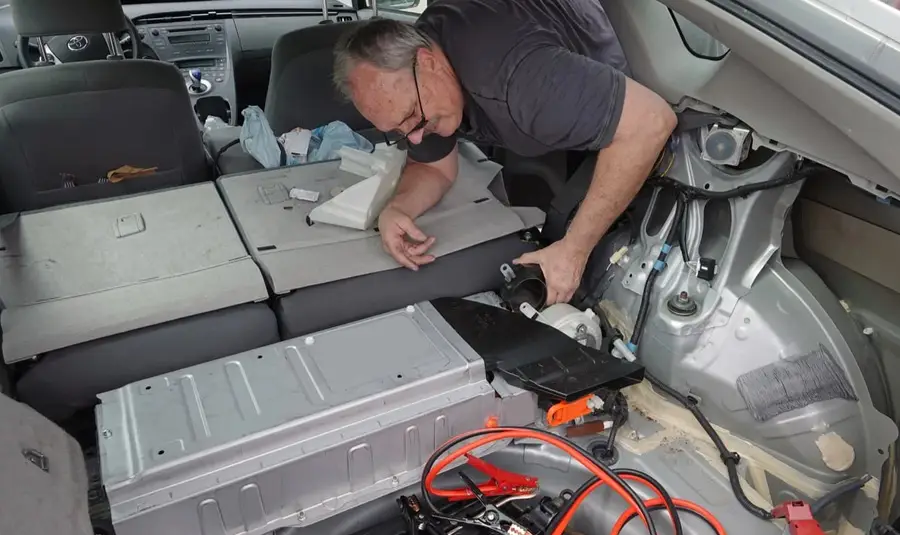
In many Toyota hybrids, one of the most overlooked parts is the battery cooling system—especially the small intake filter near the rear seat.
It doesn’t look like much.
But when it gets clogged with dust, pet hair, or debris, airflow drops. And when airflow drops, battery temperatures rise.
Even a small, consistent increase in heat can accelerate internal wear. I’ve seen cases where something as simple as a blocked filter contributed to long-term degradation that could have been avoided.
When a Car Sits Too Long, the Battery Suffers Quietly
A lot of people assume that if they’re not driving their car, they’re not causing any harm.
But hybrid batteries don’t behave that way.
In vehicles that sit for extended periods—airport parking, second cars, or just busy schedules—I often see uneven discharge across battery modules.
Some cells lose charge faster than others. Over time, that imbalance creates internal stress.
In diagnostics, even a small voltage difference between modules (often a few tenths of a volt) can signal early imbalance.
And once that imbalance starts, it rarely corrects itself without intervention.
Driving Habits Matter More Than Most People Realize
Battery health isn’t just about the system—it’s also about the driver.
From what I’ve observed, smoother driving habits tend to support longer battery life.
Gradual braking allows regenerative charging to happen more evenly. But aggressive stops? They create sharper energy spikes, which can translate into additional heat inside the battery.
Even something as simple as overusing “B mode” can affect how the battery cycles.
That’s why, when we talk about hybrid battery maintenance, I don’t just think in terms of inspections—I think in terms of daily usage patterns.
Why Modern Maintenance Is Now Data-Driven
One of the biggest shifts I’ve seen in recent years is how diagnostics have evolved.
We’re no longer guessing.
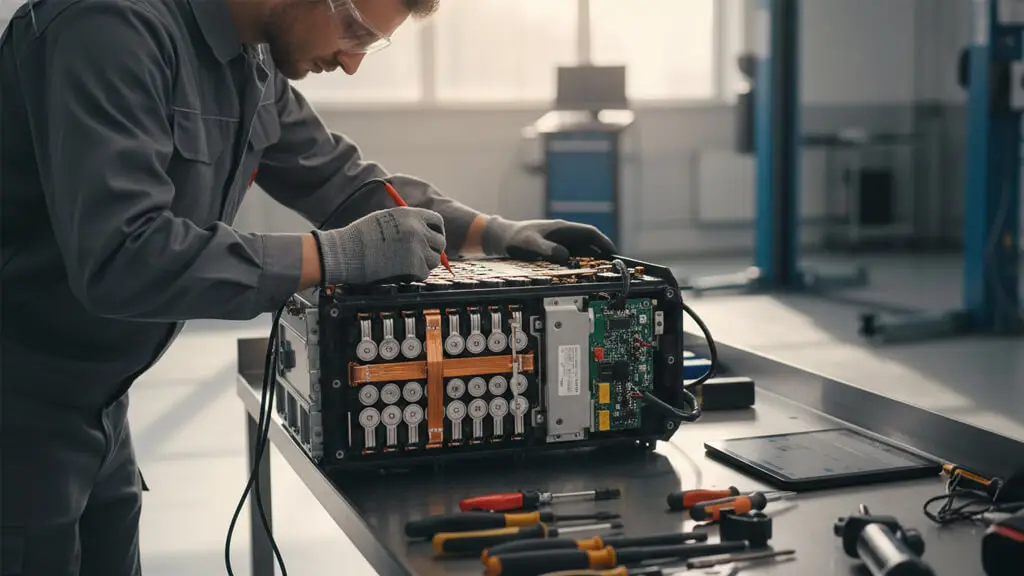
Today, we can measure voltage differences between individual modules, track resistance levels, and identify weak points long before total failure.
And those small numbers matter.
A minor imbalance today can turn into a major issue tomorrow. But if we catch it early, there’s often another option—reconditioning.
Instead of replacing the entire battery, we can restore balance within the system and extend its usable life.
Why I Do What I Do
I didn’t learn about hybrid systems from a manual; I learned by getting my hands dirty. Over the last 15 years, I’ve led the technician team here at Aloy Hybrid, focusing specifically on the science of battery reconditioning.
My work with NiMH and lithium-ion systems is built on a simple belief: you shouldn’t have to replace a whole battery just because a few cells are out of alignment. Across the Tri-State area, my team and I have restored hundreds of packs using the same high-performance diagnostics I’ve described here.
When I founded our mobile service, I wanted to bring that data-driven approach directly to your driveway.
“When you work with us, you’re not just getting a part—you’re getting my 15 years of repair decisions and a long-term approach focused on reliability and keeping your car on the road.”
Why Prius Batteries Often Reach This Stage First
Toyota hybrids are incredibly reliable—I’ve worked on enough of them to say that with confidence.
But reliability doesn’t mean they don’t age.
In fact, because Prius models are driven longer and more consistently than many other vehicles, they’re often the first to reach the stage where maintenance becomes critical.
At that point, it’s not about failure.
It’s about how that aging process is managed.
Handled early, the battery can continue performing well for years. Ignored, it can quickly turn into a much larger expense.
What Most Drivers Realize Too Late
There’s a moment I’ve seen many hybrid owners go through.
Performance drops. Fuel efficiency dips.
And the first question is always:
“Do I need a new battery?”
But in many of the cases we evaluate, a full replacement isn’t the only option.
Often, the real issue is imbalance.
When addressed early through proper reconditioning and diagnostics, we can restore performance and stabilize the system without jumping straight to replacement.
The Environment You Drive In Shapes Battery Life
Not all wear is created equal.
A hybrid driving on open highways experiences far less stress than one constantly navigating traffic, heat, and stop-and-go conditions.
In tougher environments, batteries cycle more frequently and generate more heat.
That’s why I always look at the full picture—how the vehicle is used, where it’s driven, and what kind of stress it experiences daily.
Because hybrid battery maintenance isn’t one-size-fits-all.
The Bottom Line I Share With Every Customer
Hybrid batteries don’t fail suddenly.
They give signs—subtle ones.
And in my experience, the difference between a manageable repair and a major expense usually comes down to timing.
The earlier you pay attention, the more options you have.
Wait too long… and those options start to disappear.