
It never really feels like a “big” problem at first.
A hybrid owner notices their car isn’t gliding as smoothly on electric power. The fuel economy dips slightly. The battery meter starts behaving… unpredictably. One moment it’s full, the next it drops faster than usual.
You ignore it for a while.
Until one day, the thought hits you:
“Is my hybrid battery failing?”
And right behind that comes another question—one that most drivers don’t fully understand:
“Can it be fixed… or do I need to replace it?”
This is where understanding what battery reconditioning is becomes incredibly important.
Because the answer might save you thousands of dollars—and extend the life of your vehicle in a way most people don’t even realize is possible.
What Does Battery Reconditioning Mean? A Simple Explanation
Let’s clear up the confusion first.
When people hear “battery issues,” they immediately think of replacement. But hybrid batteries don’t work like regular car batteries. They’re more complex—and more repairable.
So, what does battery reconditioning mean?
In simple terms, battery reconditioning is the process of restoring a hybrid battery’s performance without replacing the entire pack.
Instead of discarding the battery, technicians:
- Analyze its internal condition
- Identify weak or imbalanced cells
- Restore balance and improve functionality
It’s not magic—and it’s not a temporary patch.
It’s a structured, technical process aimed at bringing your battery back to a healthier, more stable state.
What Does Battery Reconditioning Do Inside Your Hybrid?
To really understand this, you need to picture how a hybrid battery works.
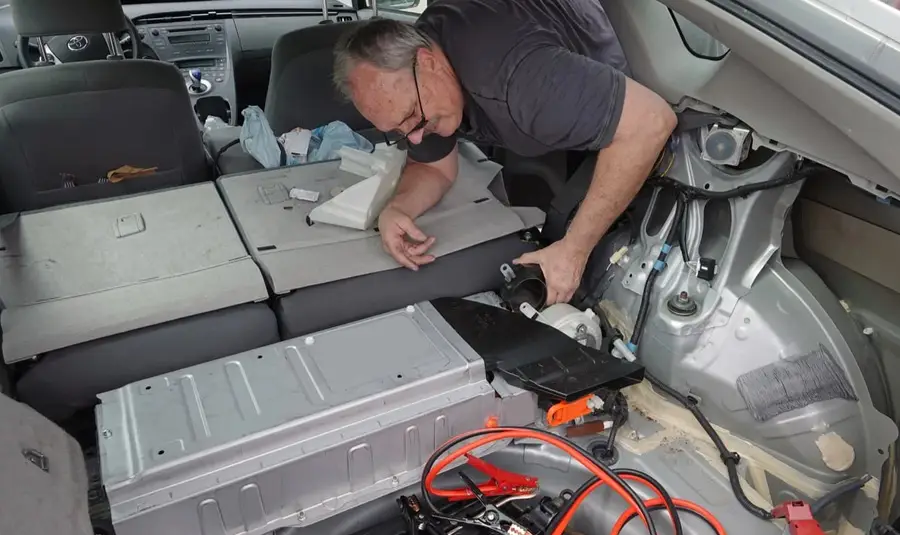
A Toyota hybrid battery isn’t a single unit—it’s made up of multiple modules working together as a system. Each module stores and delivers energy, and the entire pack depends on balance.
Now here’s the problem.
Over time, not all modules age equally.
Some weaken faster. Some hold charge longer. This creates imbalance, and that imbalance starts affecting the entire system.
So, what does battery reconditioning do?
It:
- Rebalances the voltage across modules
- Restores lost efficiency where possible
- Reduces strain on stronger cells
- Improves charging and discharging behavior
Think of it like tuning an engine instead of replacing it. You’re not starting from scratch—you’re optimizing what already exists.
And when done correctly, the difference can be noticeable.
Why Hybrid Batteries Degrade in the First Place
Hybrid batteries are built to last—but they’re not immune to wear.
The decline usually happens gradually, and many drivers don’t notice until performance drops significantly.
Some of the most common causes include:
Capacity Loss
Over time, the battery simply can’t hold as much charge as it used to. This reduces electric driving efficiency.
Cell Imbalance
One of the biggest hidden issues. When cells fall out of sync, the battery becomes unstable—even if most of it is still functional.
Heat Stress
Excessive heat is one of the biggest enemies of hybrid batteries. Poor airflow or clogged cooling systems can accelerate degradation.
Aging and Usage Patterns
Frequent short trips, long idle periods, or inconsistent driving habits can all contribute to uneven wear.
Here’s the key insight most drivers miss:
A degraded battery isn’t always a dead battery.
And that’s exactly where reconditioning becomes valuable.
Battery Reconditioning vs Replacement: What’s the Real Difference?
This is where things get interesting.
When a hybrid battery shows signs of failure, many dealerships immediately recommend a full replacement. It’s the safest—and most expensive—solution.
But it’s not always necessary.
Battery reconditioning offers a middle path.
Instead of replacing the entire pack, it focuses on:
- Restoring balance
- Improving performance
- Extending lifespan
For many drivers, this means:
- Lower upfront cost
- More usable years from the battery
- A practical alternative to full replacement
Of course, it’s not a universal solution. If a battery is severely damaged or too many cells have failed, replacement may still be the better option.
But in cases of early to moderate degradation, reconditioning can be surprisingly effective.
How Battery Reconditioning Actually Works (Behind the Scenes)
From the outside, it might sound simple.
In reality, it’s a detailed and technical process.
A proper reconditioning service typically involves:
Deep Diagnostics
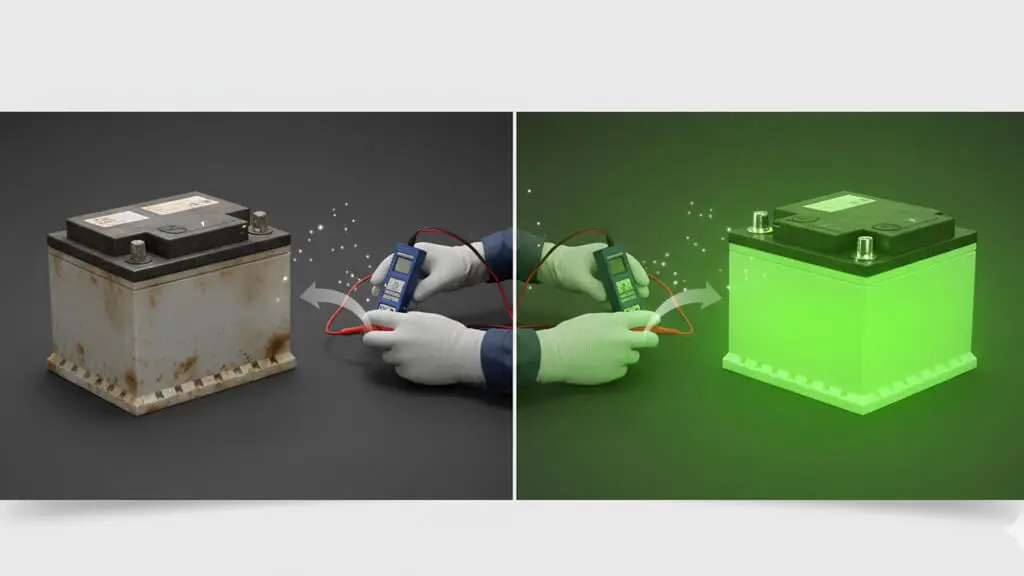
Before anything else, the battery is tested using advanced diagnostic tools. This helps identify voltage differences, weak modules, and overall health.
Controlled Charge & Discharge Cycles
The battery goes through carefully managed cycles to break down memory effects and restore capacity.
Cell Balancing
This is the heart of reconditioning. Each module is brought back into alignment with the others, reducing internal stress.
Targeted Repairs (If Needed)
In some cases, weak or failing modules are replaced to stabilize the system further.
This isn’t guesswork—it’s precision work.
And the quality of the process depends heavily on the expertise behind it.
Professional Safety Checklist
At Aloy Hybrid, we follow a strict safety protocol to protect both our technicians and your vehicle:
- High-Voltage Insulation: Use of specialized, tested rubber gloves rated for 1,000V.
- Isolated Tools: We use fiberglass or insulated tools to prevent accidental short-circuiting.
- Service Plug Removal: The high-voltage system is manually de-energized and “locked out” before any casing is opened.
- Environment Control: Reconditioning is performed in a dry, temperature-controlled environment to prevent thermal runaway.
Can You Recondition a Hybrid Battery Yourself?
It’s a common question—and an understandable one.
Technically, some aspects of hybrid battery maintenance can be done at home. Basic tasks like cleaning cooling vents or inspecting connections are manageable.
But true reconditioning?
That’s a different story.
Hybrid batteries operate at high voltage, and improper handling can be dangerous. Beyond safety, the process requires:
- Specialized equipment
- Technical knowledge
- Accurate diagnostics
Without these, DIY attempts often lead to incomplete fixes—or even further damage.
That’s why most hybrid owners choose professional services when it comes to reconditioning.
⚠️ DANGER: High-Voltage Warning
Hybrid battery packs typically operate between 200V and 650V DC. This is significantly higher than a standard 12V car battery and can be lethal if handled incorrectly.
- Do Not Touch: Never touch orange-colored high-voltage cables or internal battery components without professional training and high-voltage insulated PPE (Class 0 gloves).
- Risk of Arc Flash: Improper tools can cause an electrical arc, leading to severe burns or explosions.
- Chemical Hazard: Leaking cells contain alkaline electrolytes that are corrosive to skin and eyes.
Aloy Hybrid’s Perspective on Battery Reconditioning
Not all reconditioning services are created equal.
The difference often lies in how seriously the process is taken.
At Aloy Hybrid, the focus is on doing it right—not doing it quickly.
That means:
- Starting with accurate diagnostics instead of assumptions
- Carefully balancing cells rather than applying shortcuts
- Using quality components when replacements are needed
- Maintaining strict safety standards throughout the process
There’s also a bigger picture involved.
Reconditioning isn’t just about saving money—it’s about sustainability. Extending the life of hybrid batteries reduces waste and supports a more environmentally responsible approach to vehicle ownership.
And in a world where sustainability matters more than ever, that’s not a small thing.
A Real Hybrid Battery Reconditioning Case
A few months ago, a Toyota Prius owner came in—the dealership had already suggested a full battery replacement. But during our inspection, the numbers told a different story. Using an advanced hybrid diagnostic scanner, we found that most modules were still operating within a healthy range, averaging around 7.6–7.8 volts, while a few weaker ones had dropped closer to 7.2 volts, creating imbalance.
Instead of replacing the entire pack, we ran the battery through a controlled grid charging system, followed by deep charge and discharge cycles to restore balance. A load tester confirmed improved stability under stress, showing more consistent voltage behavior across modules.
After reconditioning, the battery regained smoother charge patterns and the vehicle’s fuel efficiency improved by nearly 15–20%, with an estimated extension of 1.5 to 3 years of usable life. What looked like a failing battery at first turned out to be a recoverable system—once the right tools, data, and process were applied.
When Is Battery Reconditioning the Right Choice?
So how do you know if reconditioning is right for your vehicle?
It’s often a good option when:
- Your battery shows early signs of performance decline
- You’re experiencing inconsistent charge behavior
- The vehicle is still in good overall condition
- You want to avoid the high cost of full replacement
On the other hand, if the battery has severe damage or widespread failure, replacement may be unavoidable.
The key is simple:
Don’t guess—diagnose.
A proper evaluation will tell you whether reconditioning can deliver real results.
The “DIY” Reality Check
Why “Tutorials” Can Be Misleading: While many videos show people “grid charging” batteries at home, they often skip the most critical step: Heat Management. Without industrial-grade cooling fans and precise monitoring, a DIY reconditioning attempt can cause a cell to overheat and vent toxic gas, or worse, cause a vehicle fire. Saving a few dollars is never worth the risk of permanent injury.
Final Thoughts: Don’t Replace What Can Be Restored
Hybrid vehicles were designed with efficiency in mind—not disposability.
Understanding what battery reconditioning is gives you a smarter way to approach battery problems. Instead of jumping straight to replacement, you explore a solution that’s often more practical, more affordable, and more sustainable.
Because in many cases…
The battery isn’t failing.
It’s just out of balance.
And with the right approach, balance can be restored.